
This article is about finding good investment opportunities, getting at least a little rich and being benefactor for society. Reading this article the spirit of Adam Smith, the author of Wealth of the Nations 250 years ago, may be with us.
An investment opportunity is supposed to give us gains and make us happy this way. Posession can satisfy: we are proud of having a part of this enterprise or owning some of these krypto-currencies. If it is possible to make the buyer also happy the world is becoming a better place.
Example: I buy an house for one million Euro. Two years later I sell it for 1.5 million Euro. I enjoy the gain, my buyer enjoys the beautiful he got for his money. Everbody is happy.
I calculated risks and gains and put money on real investment chances, which are a net worth for society. The worth of housing in general did elevate, and my gains are part of that. The house I sold has increased in value, the reason being the higher price the buyer paid,
Another way is to become active, found a business and calculate the perceived earnings per customer
Becoming millionaire with 10 € starting investment in 17 years
Many people got rich with less. For example, starting with 10 € which double themselves every year creates 1.31 million € after only 17 years.
No organism grows continuously over an indefinite time. So the growth will stop after some time. Or the investor looses interest, takes the money and moves to a hurricane-ridden Caribic island to satisfy other human needs and wishes there.
Benefitting society and becoming a little rich is possible
Is there anything in the world I can improve and I get a share of the money created from the use of the thing? This applies even for the ones who make us happy with their videos on tiktok or YouTube. Marc Zuckerberg created Facebook and got rich with that. He forced competitors out of business. His solution worked better and therefore he had more users and more advertising.
Let’s talk about a investor called Robert. He likes to sell and buy real estate or shares on real estate. Also he wants to contribute to modernization of energy supply. At this moment he has about 50.000 € available. Also he is thinking about selling natural dogfood online. He read that this can be a nice sidejob with little investment.
At first Robert is confused of the many good and bad investment opportunities. What does need to free his entrepreneurial spirit?
From an economical view, getting rich also means to benefit society. People buy things which are useful for them. The entrepreneur provides these goods and services and keeps a part of the revenue.
To find an easy way full of fun to success Robert has to consider the following:
1. What he likes to do
2. What others like him to do
3. What he think he likes to do ( notice the difference to #1 – this is about self-reception)
4. What Robert believes others want to buy from or the enterprise he bought a share
5. The limits of his environment – the world is bigger than the area he can take notice of
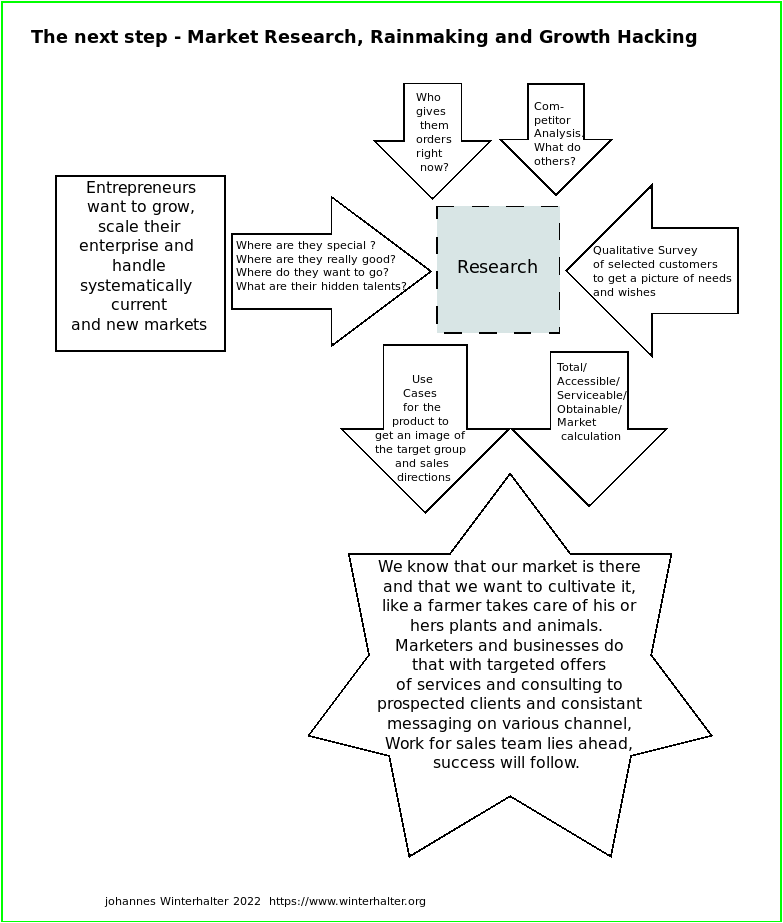
6. The hard numbers – is there really a big market for the products?
7. Where he can really improve the perceived life situation of others.
What is the next step?, Ok, consulting me or another business coach/consultant looks good. Some can discuss the matters with mentors and friends, who are good in business, others do better with paid assistance.
After having a free mind without barriers from culture and family background, there is a chance to see the next big thing, for you and society.
The real important steps are:
#7 is the most important thing: this is your working next best thing.
For researching #4 and #6 I am a good fit. I have a lot of data for calculating your market and possible success.
Robert looks for a good way to invest his money and having control about his money
Separating good investments from bad investments is similar to start an own business. Robert has to look at point 4 to 7 of the previous paragraph and do the analysis. If all goes well, he wants to buy. Thats it – buy after best possible analysis and wait for earnings. The investments have to be checked regularly and maybe sold at the right time.